Audit
We review print volume, shift patterns, color drift, current maintenance records and operator confidence before recommending press coverage.
Ricoh service begins before the purchase order. We look at the jobs that keep your shop profitable, the operators who run them, the substrates that cause the most rework, and the finishing handoffs that turn a fast press into a late shipment. The goal is a service plan you can explain to production, finance and customer service without translation.
Request Case Studies (PDF) ›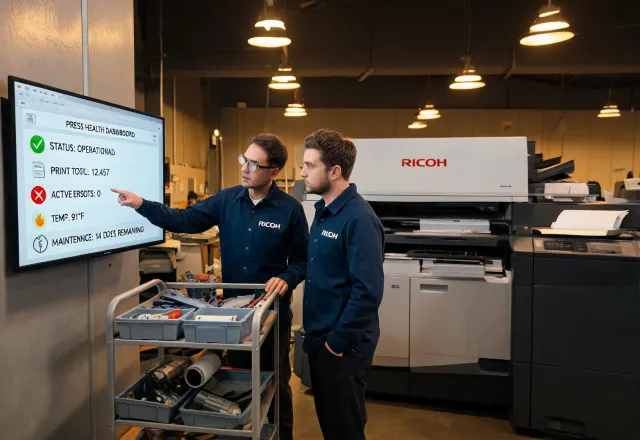
We review print volume, shift patterns, color drift, current maintenance records and operator confidence before recommending press coverage.
Operators learn daily calibration, stock change routines, TotalFlow job preparation and escalation steps that fit the way the shop is staffed.
Regional depots stage wear parts, consumables and emergency kits against the press models and duty cycles your site depends on.
Ricoh advisors revisit the workflow after live production, then tune imposition, MIS handoff, color targets and training materials.
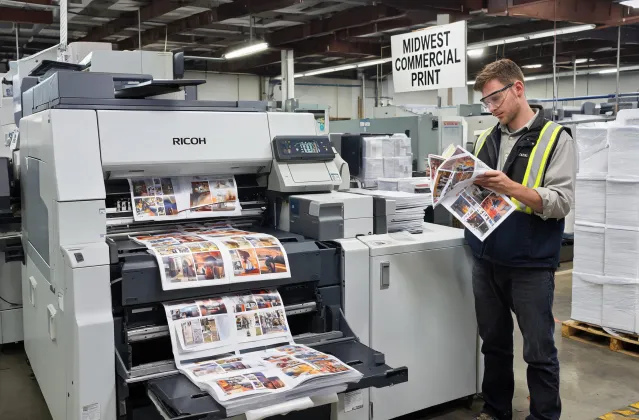
A six-month Ricoh engagement combined a press health audit, coated-stock calibration, TotalFlow ticket cleanup and G7 retraining for two shifts. The shop stopped treating color drift as an unavoidable rush-job tax. Make-ready on recurring catalog signatures dropped from 47 minutes to 29 minutes, and customer service gained a repeatable explanation for color sign-off. The service team stayed through the first live campaign instead of leaving at mechanical acceptance.
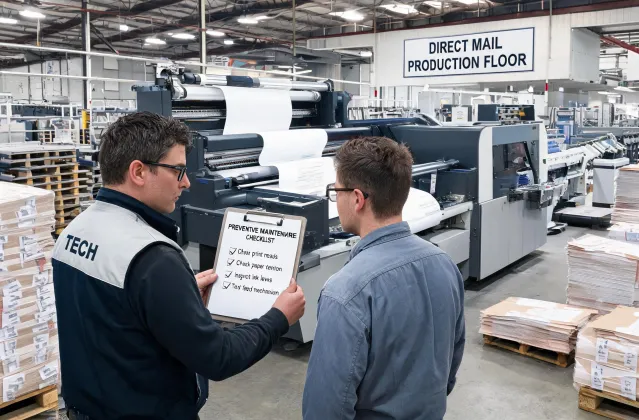
The site ran nightly variable-data mail and could not wait for generic parts escalation. Ricoh mapped recurring wear patterns, stocked the nearest depot with the right heads and rollers, and trained operators to capture useful fault notes. Remote triage became specific enough that service vans arrived with the likely parts already loaded. Finance tracked the result as recovered billable capacity rather than a soft satisfaction metric.
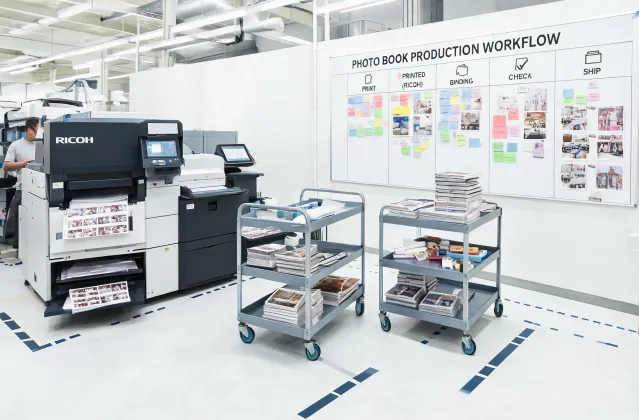
A photo lab facing seasonal surges needed a lower-risk way to support web orders without replacing everything at once. Ricoh reviewed current machines, finishing constraints and staffing, then built a phased plan around operator training, TotalFlow batching and a service calendar. Two existing presses were redeployed, one new production device was added, and the team reached useful output in eleven weeks.
Send the press model you are considering, your weekly job mix, and where downtime hurts most. We will match you to the closest Ricoh service example and explain the practical coverage path.