Not sure which Ricoh press fits your shop? Get a 60-second production match. Start Finder ›
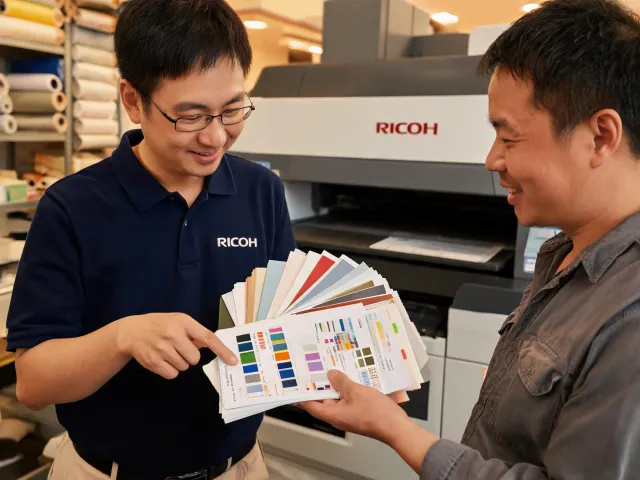
Ricoh advisor discussing production print samples with a customer
About Ricoh

How a service conversation became the buying process

Ricoh was founded in 1936, but our production-print promise is very current: buying a major press should teach a print shop something useful before it asks for a signature. We combine imaging research, field service and operator training so a buyer can compare press choices against real jobs instead of brochure categories.

Ricoh's North American production-print group grew around a simple frustration heard in print shops everywhere: the person selling the press often did not understand the night shift, the bindery cart, the stock change, or the customer who needs the same red next quarter. Our advisors start by asking for the work, not the budget. A short-run book printer, a direct-mail operation and a corporate in-plant may all search for a Ricoh printer, but their risk is different.

"A press recommendation is only helpful when it includes the workflow, the service path and the operator handoff."

That belief shapes how we explain Ricoh digital presses, inkjet platforms, wide-format printers and TotalFlow software. We talk about coated stock, uncoated stock, finishing queues, MIS data, calibration, technician availability and consumable planning in the same conversation. We would rather slow down the first meeting than install a press that creates a new bottleneck two rooms away.

Today Ricoh supports tens of thousands of production and office print environments with 240+ field engineers, 23 regional depots and a practical network of training resources. The scale matters, but the tone matters too. The best conversations still feel like a shop-floor review: plain language, measured claims, and enough detail for operators to trust the plan.
What we will not compromise

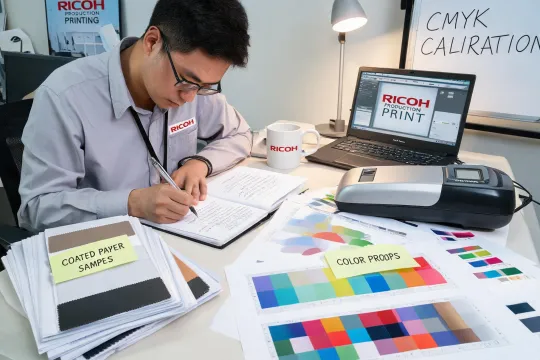
Ricoh engineer writing an application note with printed samples

Application notes written from real shop questions

Every recurring question becomes clearer documentation: how to prepare a file for a coated-stock repeat job, when to choose toner over inkjet, how to stage consumables for a seasonal mail campaign, or why a TotalFlow rule prevents a bindery surprise. The notes are practical because they begin with operator language.

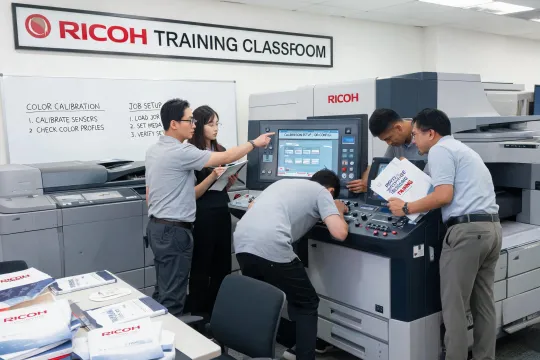
Ricoh operator training in a commercial print classroom

Operator training that follows the shift

New equipment succeeds when the second shift feels as confident as the install team. Ricoh training includes commissioning, daily checks, color routines, job-ticket habits and escalation rules. We build a handoff that production leads can reuse when a new operator joins six months later.

Talk to us, and bring the messy details

Share the substrates, run lengths and workflow headaches that make press selection difficult. Ricoh advisors are comfortable starting there.